Showing posts with label School. Show all posts

Tuesday, April 2, 2019

It’s All About the Butts - Empowering Smokers

A typical rest day for me is lying down on a batik sarong on the soft sandy beaches of Pulau Langkawi. I pick my spot under the natural shading courtesy of pokok ketapang. My set-up is made complete with some natural history and Sci-fi literature. When it gets too hot, I simply walk into the sea to cool off. Floating in the emerald waters of Langkawi while looking at landscapes as old as time, I have to concur with renowned Malaysian naturalist and my mentor, Irshad Mobarak, that heaven is indeed a place on Earth, and that place is Pulau Langkawi.

Trouble in Paradise and the Big Blue

However, not all is great in paradise. I often see litter on the beach. Litter like tissue paper, beverage tin cans, plastic bags, straws, and all kinds of food packaging decorate the sand. I pick up whatever litter I can and discard it when I get home. By far, the litter I pick up most often is the cigarette butt. I have collected up to 40 cigarette butts on a 20 metre walk on the backshore of Pantai Pasir Tengkorak, a quiet beach situated away from the busy tourist spots of Kuah town and Pantai Cenang. At Pantai Cenang, I counted the same number of cigarette butts but along just a 5 metre line of its backshore. Ridiculous! Even more frustrating is that these are just the butts that are sticking out from the sand. The gentle quartz sand is likely hiding more.

This is not a phenomenon unique to Pulau Langkawi. In fact, for the past decade, Ocean Conservancy has reported cigarette butts to be the most collected litter on their annual global coastal cleanups, with a record of 2,248,065 pieces in the year 2015. That is at least a million more than plastic bottles in the same year! Surfrider beach cleanups report that one in every five items collected is a cigarette butt.

While it might be tempting to blame beach users and tour operators, cigarette butts make their way to the coast and into the ocean via natural and man-made drainages. An improperly disposed butt from the plant boxes of KLCC Park gets a free ride to the ocean when it is washed away from the epic downpours of Kuala Lumpur. Rainwater carries the butt into drains that empty into Sungai Klang before ending up in the Straits of Malacca.That butt will then add to the cigarette butts in the ocean, currently estimated at around 4.5 trillion pieces.

More Than Just Paper

Just what is a butt? In the wake of strong research showing that smoking causes serious diseases, filtered cigarettes became dominant in the 1960s for the alleged increase of health safety the filter provides for the smoker. This filter is made of cellulose acetate, a non-flammable polymer created by adding a chemical to cellulose, the stuff that makes up the cell walls of plants and lets them grow tall. While the squishy white filter underneath the cigarette paper appears harmless, it is not readily biodegradable and takes anywhere between 18 months to 10 years to “disappear”. Because the filter is compact and rich in chemicals, the “disappearance” of a filter only happens in extreme conditions and usually means it is broken down into tiny pieces known as microplastics and microfibers. They enter ocean food webs which humans are part of as plankton mistakenly ingest them as food. That delicious ikan tiga rasa you had the other day is probably laced with these micro particles. Furthermore, these persist in the environment for millennia.

The “Cili Padi” of Litter - Small but Painful Punch

The minute spaces within the filter trap dangerous chemicals from burning cigarettes, such as nicotine, tar (no, not the hydrocarbon used to make roads, but “total aerosol residue” of toxic chemicals), carbon monoxide, hydrogen cyanide, and do not forget the many different types of carcinogens. These chemicals can leach into water and have have devastating impacts on aquatic life of all sizes - from microorganisms such as bioluminescent marine bacterium and tiny crustaceans called water fleas, to medium-sized fish in both freshwater and the sea. Cigarette butt litter can even collapse aquatic food webs in severe cases when microorganisms are wiped out due to the ingestion of “empty calories” of cigarette butt micro particles. Basically, no microorganisms, no food for the small fish; no small fish, no food for the big fish; no big fish, no seafood.

A cigarette butt, too, is the perfect size to act as a choking hazard to hungry wildlife that mistake it for food.

Changing Mindsets and Empowering Smokers

Public service announcements to quit smoking bombard smokers in Malaysia on a daily basis. All smokers hear and read about smoking is in negative light. This repressive narrative must switch to an empowering narrative encouraging smokers to stop flicking cigarette butts into places other than the bin if we are to reduce the environmental impact of smoking.

Smokers who simply refrain from flicking their butts can do so much for the environment. It can be tough to break the flicking habit, but here are some tips for binning them butts, after you completely stub them out, of course:

  • Only smoke in designated areas - Smoking areas generally have proper bins with an ashtray for all your stubbing needs. Just make sure to use them and not the plant boxes. The soil and plants do not need your cigarette butts.
  • Request an ashtray - Some establishments allow smoking on/in their premises. If there is no ashtray close by, request one from the staff members.
  • Bring your own ashtray - My friend’s stylish portable ashtray intrigued me when I first saw it about three years ago. It is a metal box with a button that engages a cigarette holder when pressed. Smoke away and flick your ashes and butts into the metal box, then store it in your pocket or purse until you find a bin to discard the refuse.
  • Upcycle suitable packaging into a portable ashtray - Small metal containers for mints and glass shakers for your dried herbs and spices are great alternatives to somewhat costly portable ashtrays.
  • Encourage your fellow smokers to be responsible - Spread the word that smokers can make a difference for the betterment of the environment. Do it with passion and joy to effectively touch people on an intrinsic level.


The choice to smoke is ours, but smokers should make the choice to bin their butts. Flicking cigarette butts everywhere but the bin has profound effects on the environment. But there is still time to save the environment when smokers unite and take action!

Beyond Stopping Cigarette Butt Littering

Smokers can further help the environment by being informed and responsible consumers. Smokers can write to their favourite brands to pressure tobacco companies to be environmentally conscious. More tobacco plantations must employ sustainable practices to reduce excessive use of water and to stop the clearing of forests. How about getting tobacco companies to rethink the packaging of tobacco products? Perhaps organic-based “plastics” can substitute the current plastic wrapper enveloping brand new cigarette cartons. It is also high-time for true biodegradable filters (like “greenbutts”) to be mainstream so cigarette butts do not occupy our landfills and our natural surroundings for eons to come. All of these require the voice of the 22.8% of the Malaysian population who are smokers. Take action and make change!


I originally wrote this article for a class that was meant to be published as a Star2 article but received no bites from the editor. I blame it on the high of the general elections in 2018 but maybe my composition just sucks. Therefore, I have decided to share it on my blog. Maybe some of you readers may benefit from this.

Saturday, October 7, 2017

Can't Belize it's the FinalEE

Get it? Get it? I cannot Belize (believe) it is the finalEE (portmanteau of "final" and "EE" to spell "finale"; "EE" is the acronym of Earth Expeditions). Okay, okay. I tried too hard.

You guys right now. Meme credit.
I really need to start blogging more consistently. I keep saying this. In fact, I mentioned it in my entry about my Baja Earth Expeditions almost a year ago. Heh.

This year has been weird and confusing. I left my awesome job in Langkawi and moved back to the Klang Valley to be closer to my girlfriend, family, and Tiny and started working for a place I thought would kick-start my career in Malaysia at after graduating and moving back to Malaysia about five years ago. The last couple of months in Langkawi drained my usual motivation and passion I have in life. I do not know why, maybe it is the packing, maybe it is the uncertainty feeling you get after making a major life decision... Whatever it is, I have become lazy and pessimistic. I was not even looking forward for my last ever EE in July. No more close-to-ideal job, no more clear roads (traffic in the Klang Valley is legendary), no more cheap booze, and how can Belize EE top last year's super amazing, mind-blowing Baja EE!

I shall dedicate some time in writing about my entire Belize journey in detail in the months to come but the conclusion is that my field trip to Belize was very uplifting, eventful, and memorable. All that negativity that defined me since the beginning of the year started to melt away at the "beginning" of the course when I met a couple of my classmates in Dallas Fort Worth airport  waiting for our flight to Philip S.W. Goldson International Airport, Belize. I knew from then on that it was going to be a fulfilling time in Belize. And it actually turned out to be so!

There are plenty of things to write about my Belize EE; the wonderful classmates and field partners, the uniqueness of Belize Zoo, me being introduced to yet another natural habitat called the "tropical pine savanna", the diversity of peoples in Belize, the community-based initiative to conserve riparian forests and "baboons" and my foster family, the Mayan ruins and culture, Baird's tapir shit, Vermilion flycatcher and other beautiful birds and wildlife, amazing Belizean food, and the coconut-falling-but-it-missed incident. I am tearing up recapping the trip.

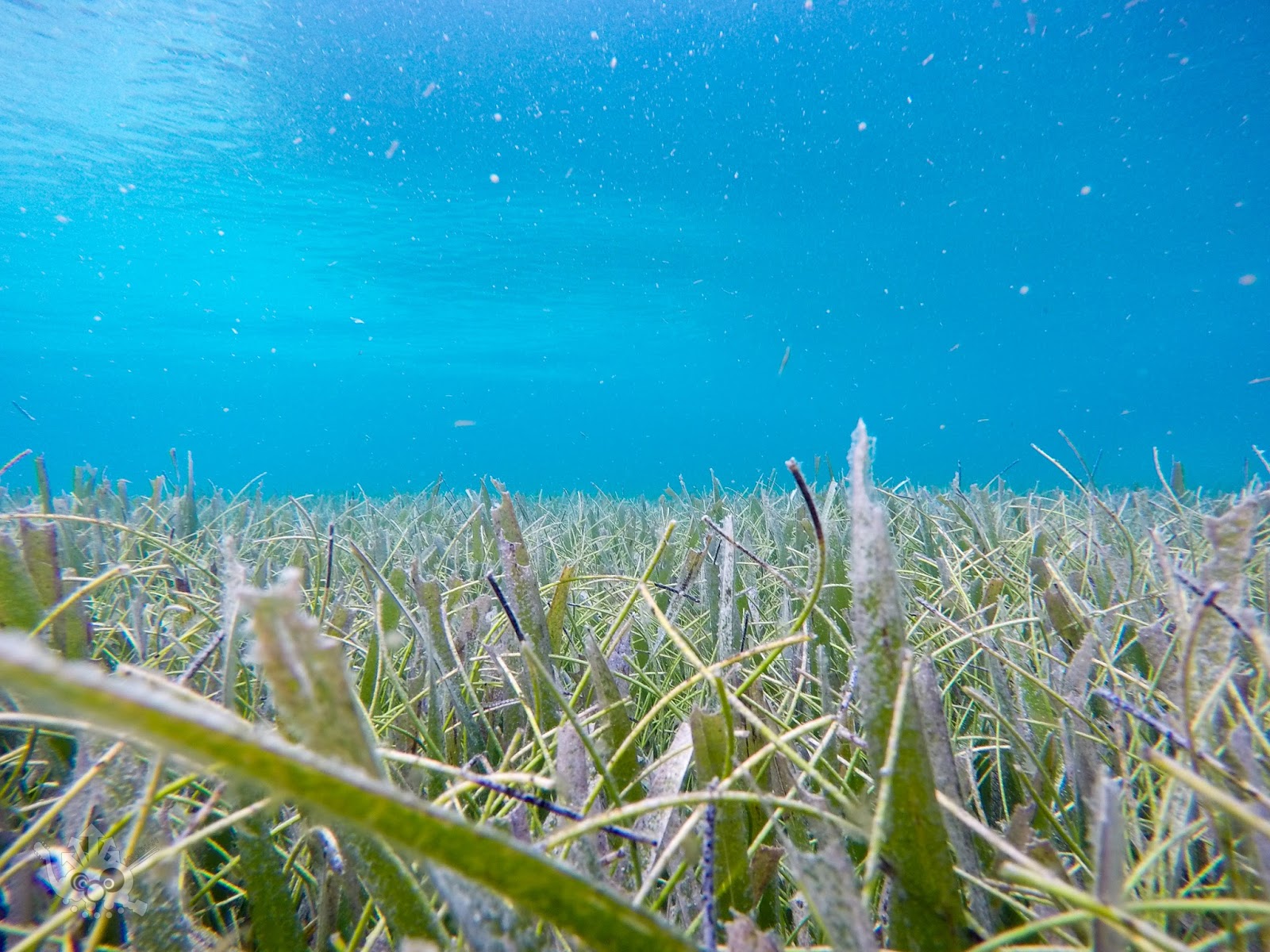
There are two significant and memorable incidences during this EE: looking at extensive seagrass meadows for the first time in my life and snorkelling outside of a massive barrier reef. These moments left me dumbfounded in awe.

I want to respectfully and responsibly lay on the seagrass and just enjoy the blueness of Earth.

In both situations I felt peace. I can truly admit that all the worries I had of uncertainties, sadness from the dying of an artist who is part of my biggest musical inspiration, tiredness, regretfulness, all disappeared during these incidents. The blades of seagrass stood still, sometimes waving to the gentle currents. I wow-ed countless of times underwater in the presence of the magnificent spur and groove formations of the largest barrier reef of the western hemisphere, formations shaped from the movement of water for thousands of years. It is akin to a patient artist sculpturing his/her very own Le Penseur. All I want to do is just float in the water, be still, and enjoy these natural phenomena.

Me trying to be part of something great.
Many of the past EE participants will mention that these field trips will help you discover yourself. I believe I have finally discovered myself or refueled the passion in me, experiences that are so relevant to me for this current period of my life. It is moments like being inches away from the blades of the seagrass and floating over a barrier reef that make me want to be a better environmental steward and inspire the people around me to care for the natural environment that also keeps us as a species alive! I am also reminded how important and valuable the people are in saving the things I love. They are after all part of the things I love.

The next few months after the publishing of this entry will resonate with what I have learned, felt, wanted during my final EE. I have revert to my former self of being afraid and excited at the same time, a feeling that I know has brought out the best of me in the past.

I am missing the cultural and natural heritage of Belize, Chester Bennington, and my classmates, instructors, and field partners.

Till we meet again, friends!

Sunday, December 11, 2016

Recycling in Langkawi

It has been a wonderful Fall semester for me with the Global Field Program. The two classes I had to take this Fall required me to connect with the local community. (I suppose one of the communities in Pulau Langkawi. I am still not sure what the "true" definition of "community" or "local community" is, thanks to a very interesting discussion at the Vermilion Sea Field Station during the summer field trip of the Program.)

Since the theme of my master plan revolves around living sustainably in a UNESCO Geopark, a designation and commitment (obligation to some) that extends to the entire Langkawi archipelago, I thought it would be a good idea to investigate how solid waste is managed on the most inhabited island of the archipelago, Pulau Langkawi.

Basically, everything goes into a landfill next to a non-functioning incinerator. (At the posting of this blog entry, the incinerator has yet to be in operation since the publication of this news article.) Sometime in August this year, some people were sharing videos of a famous tourist attraction, Sungai (means 'river' in Bahasa Malaysia) Kilim, flowing black. Not sure if this is conclusive or not, but authorities started checking out the good ol' landfill and determined, from rapid water quality testings and visual observations (of how mismanaged the landfill is), that the cause is from the direct pollution from the landfill, or specifically an illegal extension of the landfill onto the river banks. (It still boggles me how Langkawi's member of Parliament deducted with confidence that prolonged point-source pollution has no effect on the aquatic/marine life just after maybe a couple of weeks of investigation.)

This one incident sparked the exposé of how poor the management of solid wastes (news article is in Bahasa Malaysia, please use Google's translation service) is on the island that is marketed as "Naturally Langkawi". And whatever happening in Pulau Langkawi is a microcosm of how solid waste is treated in the country.

A shot featured on the exposé mentioned above of Pulau Langkawi's landfill. What is not shown here is the piling up of rubbish right NEXT to the incinerator that is not in operation, a visual metaphorical middle finger from the local government to tax-paying Malaysians all over the country (or maybe just the state of Kedah). The picture in this article is a mash between two photos. 
And do not forget about the litterbug habit of the majority of Malaysians and their fascination of dumping their rubbish UNDER "no dumping rubbish here" signboards throughout the country, creating many, many illegal mini "landfills". This picture, although without the "no dumping rubbish here" signboard, is a forest cleared along a main road on Pulau Langkawi for NO REASON and have been turned into an illegal landfill. Good job, Langkawi, good frigging job.
So how now brown cow? Reducing the amount of rubbish you generate is the best way to not contribute to the filling up of landfills. Another way is to redirect the rubbish we have created from being disposed into landfills by recycling. Unfortunately, Malaysia is very behind in the recycling game, only recently making separation of the solid waste we make at home (some of you may be thinking your fecal matter is solid waste, that is considered to be sewage-lah) MANDATORY. In response to this mandate, Pulau Langkawi has started kerbside recycling - basically having a separate pick up time for the recyclables collected in households from the usual rubbish kerbside collection.
Unfortunately, this kerbside collection of recyclables is only available to about 16.5% of the households in the Langkawi Archipelago (about 3,250 households in Kuah town of Pulau Langkawi).

The rest of the archipelago, if wanting to do our civic duty to not continue to ruin our natural surroundings, have to proactively separate our wastes at home, collect enough, and then send them to recycling facilities. But try googling your hearts out and you will never find good directions to or reliable information on the recycling facilities on Pulau Langkawi. Which is why I decided to focus my Inquiry Action Project (IAP) and Community Engagement Lab (CEL) on recycling in Langkawi.

For this to happen, I got in contact with E-Idaman, the company in charge of collecting the solid waste in the municipality of Pulau Langkawi. It was a very pleasant learning experience. For my IAP, I decided to investigate the response of the 16.5% that HAVE to carry out separation at source at home. For my CEL, since searching for recycling facilities on the island is very troublesome (no reliable results on search engines), I decided to identify the different recycling facilities present on the island and mapped their locations to create an online resource for the public to use. (This map is also one of the "action" components resulted from the findings of my IAP. You can find the map here. Click on the different pins to learn more about the different recycling facilities.)

To summarise: I found a significant reduction in the weight of recyclables collected from the kerbside collection five months after "mandatory" separation at source began; a really minute number of households actually practice separation at source and the weight of recyclables collected is (not statistically) insignificant to the weight of solid wastes produced on the island (~ 50 kg of recyclables a month compared to ~ 120,000 kg in a day); though a small number of residents were interviewed, a majority of them told me that we have to recycle for the good of the environment and the biggest demotivator to recycle is "not having any waste that can be recycled"; the recycling facilities on the island is very concentrated towards the southern part, most of them in Kuah town, while no recycling facilities (nor kerbside collection program) exist in other parts of the island. You can find full details of my inquiry from my final reports (IAP, CEL). (After submitting them, I feel that my reports were poorly written, like this entry. I am sorry.)

A screenshot of the map I created for my class, which I now use to find the closest recycling facility in my vicinity.
An E-Idaman representative and I suspect that the interviewees that said they are not recycling (practicing separation at source) because they do not generate solid waste that are recyclable may not actually know what are considered to be recyclables, or what are collected to be recycled on the island. So with the help of my bestie, I decided to come up with a localised infograph of the solid waste that are to be recycled. (Another reason to do this, which I did not share in my final reports, is that not all of the recyclables listed on the government's website to get Malaysians to separate their waste at source are collected to be recycled on the island.)

Langkawi only accepts paper, plastic, and metal. The rest are not accepted at all, what a shame. I am still very disappointed when I found out that glass is NOT accepted at any recycling facilities, nor the kerbside collection service. What a waste, since the island produces quite a lot of glass waste being a duty free island (cheap liquor).

Kenneth's super awesome creation to help residents of Langkawi sort their rubbish properly to be recycled!
It is a shame that the government is not enforcing this mandatory separation at source in its entirety, as there are no plans to do this in the other households/parts of Langkawi and not warning nor fining any offenders of this law. (Households can be warned three times before getting fined by the relevant authorities which can reach up to RM1,000.00 for repeated offenders!) I think the enforcement of this mandate is a failure from the start because everything seemed really rush and the announcement was not "grand". And I believe it did not reach many Malaysians. (Only one news article in late 2014, separation at source started out in September 2015 with many Malaysians still not knowing what to do because of the lack of awareness campaigns, and not having a proper framework to monitor this practice even after almost two years before "enforcement".)

The bad planning and the (federal, state, local, whatever) government's inability to execute this law properly, make me question how on earth are law enforcers going to know which household is practicing separation at source and which is not? What if a household only practices separation at source once a month (sounds efficient)? So many shortcomings of a wonderful law to help battle the use of landfills to safeguard out natural resources. (Unless these leaders of state decide to sell forest land to businesses. Ugh, greedy people.)

I know the findings of my inquiry and mapping exercise are quite demotivating, but I hope the infograph and the map created for my assignments will be useful to anybody interested in recycling on Pulau Langkawi. I truly believe that we can live sustainably on Pulau Langkawi, and it can be as simple as sending your plastic bottles to be recycled.

Sunday, October 9, 2016

So Green.

I have been meaning to write an entry about my Earth Expeditions trip to Baja California, Mexico in July but have managed to procrastinate writing about one of my best life/travel experience for THREE MONTHS! I know, I be lazy. I also blame less than favourable internet connection speed and longevity and having to actually blog for work; basically typical master procrastinator excuses.
I learned a lot from my experience on the Australia EE in 2014; from learning about Great Barrier Reef ecology to the clouded rainforest of Paluma Range National Park, and being exposed for the first time to community-based conservation and inquiry-based learning. I think my favourite part of the trip was learning about and from the Nywaigi people of Australia at Mungalla Station. This picture is of the wetland restoration project the Cassady family has done at Mungalla Station.
Earlier this year, I got accepted and enrolled myself into a Masters program with Miami University called the Global Field Program (GFP), a program very suitable (but not limited) for educators of all fields (schools, museums, zoos, aquaria, and etc.) interested in conservation and inquiry-based learning. The major attraction of the GFP is its summer Earth Expeditions (EE); a way to travel and earn credits for your graduate studies, for personal development for potential career advancement, or personal development for simply your own personal development.

Not wanting to commit fully to pursuing a Masters degree previously, I enrolled into the Australia EE in 2014 as a standalone class just for the seven graduate credits after reading about EE courses sent to the University of Hawaii at Hilo Marine Science Department's listserv (which I still check once in awhile for any career or graduate studies opportunities). Needless to say, I had a wonderful time and somewhat enjoyed the lessons then. (Evidence of me enjoying my Australia EE trip: 1, 2, and 3.)

Since leaving my job at a milk packing facility in the end of 2014 and starting my amazing job in Pulau Langkawi, why not do graduate school while working? The GFP is very compatible to my current job in education and outreach and conservation science. So I gave it a go.

My first GFP class is a summer EE to Baja California. Initially, I was slightly disappointed in being placed into this EE. Because even though learning and experiencing the pelagic ecosystem of the Sea of Cortez would be amazing, I was not too keen to learn about the desert of Baja California. Why should I learn about the desert when I live and work in a tropical rainforest?! Even the text I had to read about the desert flora of Baja California is a boring and dry read. (Pun intended; I will show myself out.)

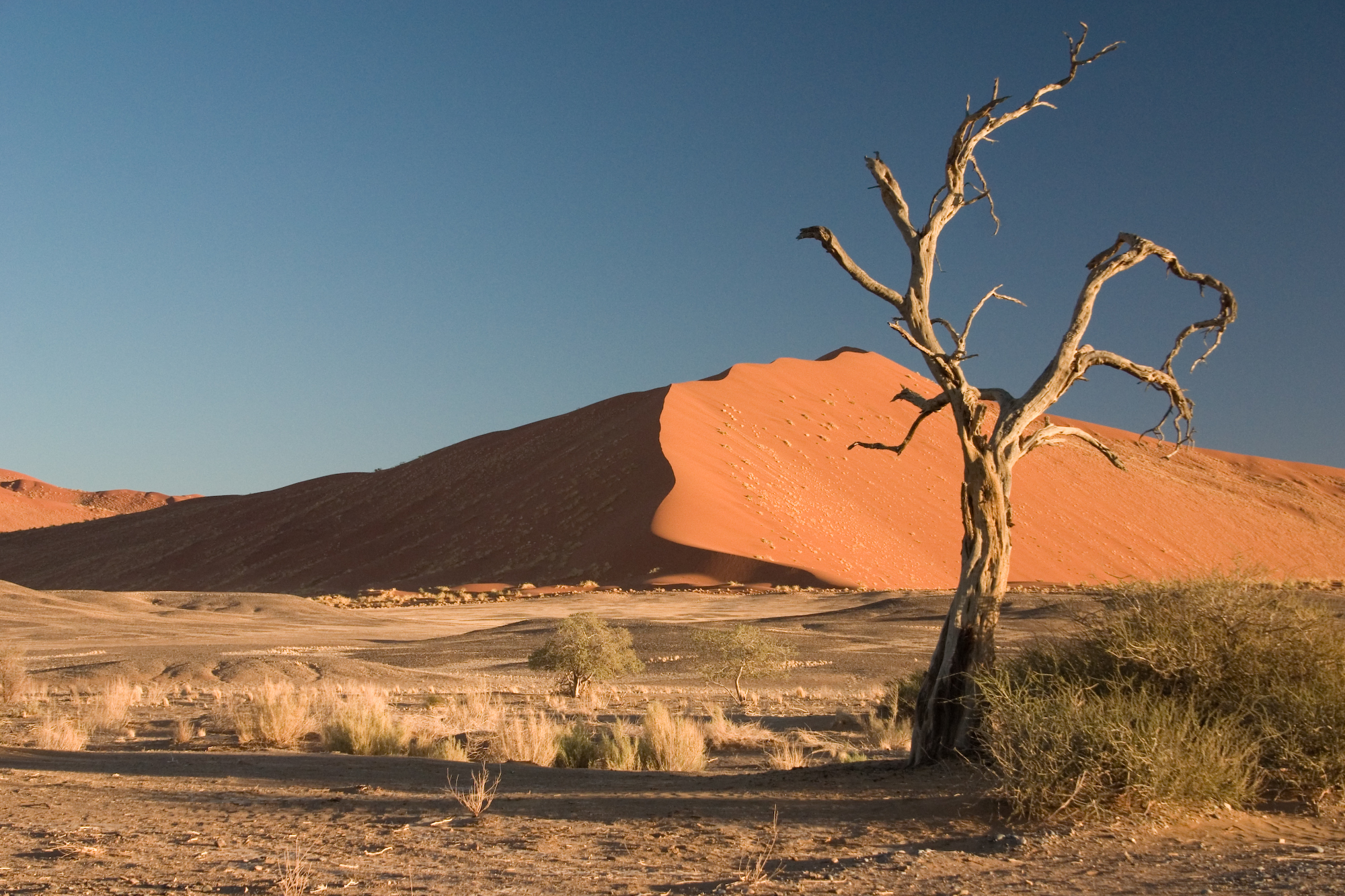
It was not until the long (but fun) drive (it turned out to be a roadtrip) into the desert on our way to Rancho San Gregorio did I realise how alive the desert of Baja California can be. I was seeing GREEN along Highway 1, a sight I would never have expected in a desert, even after reading about it.

I expected the desert to be more like this. Photo credit.
Instead, I got views of lushness like this. Photo taken close to Catavina Town.
And this. Just look at how green the valley is! There are even visible green patches on the hill. Shameless selfie taken on a hike to view Cochimi cave paintings.
I am also glad to have classmates who know a lot about desert flora, pointing out the different types of plants we come across. I especially enjoyed learning about the desert from Rafael Villavicencio, the "chief" of Rancho San Gregorio. (Rafael is a computer guy turned traditional healer. He reminds me very much of Dr. Ghani, medical doctor practicing traditional Malay medicine in Langkawi.) Life is tough in the desert of Baja California but it provides for the survival of many generations of people and animals. It provides enough.

Rafael conducting an ethnobotany walk for the class. In this picture, I think Rafael was explaining about the palo verde tree, which is a source of food for horses and branches can be used to make tea.
Rafael explaining how the Villavicencio family has farmed in the desert for a long time. Behind him is a grape vine he or one of his relatives planted. The family has also planted date palm trees!
Fruits of the nopal (Opuntia cactus), also known as the "prickly pear". This is just one of the few examples of the sustenance provided by the desert. This fruit is surprisingly juicy, an apt snack after a walk in a 48 degrees Celsius desert with little to no clouds. The other parts of the nopal can also be eaten. We had a nopal salad on a couple of meals. Guys, I ate CACTUS.
I am still in awe of how alive a desert can look.

Another surprisingly place to have green is on a mostly barren volcanic island about 800km away from Rancho San Gregorio in the Sea of Cortez. The class got to check out the cutest mangrove forest ever here. The craziest part of it all is that there is no freshwater visible on the island, with little rainfall too, and then BOOM! (insert "Surprise mutha..." Dexter meme) A thriving mangrove forest relying on saltwater.

Beautiful.
See how cute these stunted mangroves look? It looks like a species of Rhizophora. I think the mangroves here are short because a lot of their energy are being used to desalinate the saltwater for freshwater for survival instead of growth in height. If this is true, what an amazing adaptability!
My Baja EE definitely reminded me that nature, or life, will find a way to survive and then thrive in the future. It is an inspiration to me as I continue being involved in conservation work in Malaysia.

This is just one of the few entries I am going to be writing about this EE. I am not sure when the next entry will be, but stay tuned? There are plenty yet to be shared.